For twenty years, HMS Hood was the most famous warship in the world. She was the biggest, the fastest for her size, and every other navy compared itself to her. Sailors called her the “Mighty Hood.”
Then, on the morning of May 24, 1941, she sank in under four minutes. Out of a crew of more than 1,400 men, only three survived.
That’s the whole story right there: a ship everyone thought was unbeatable, gone almost instantly.
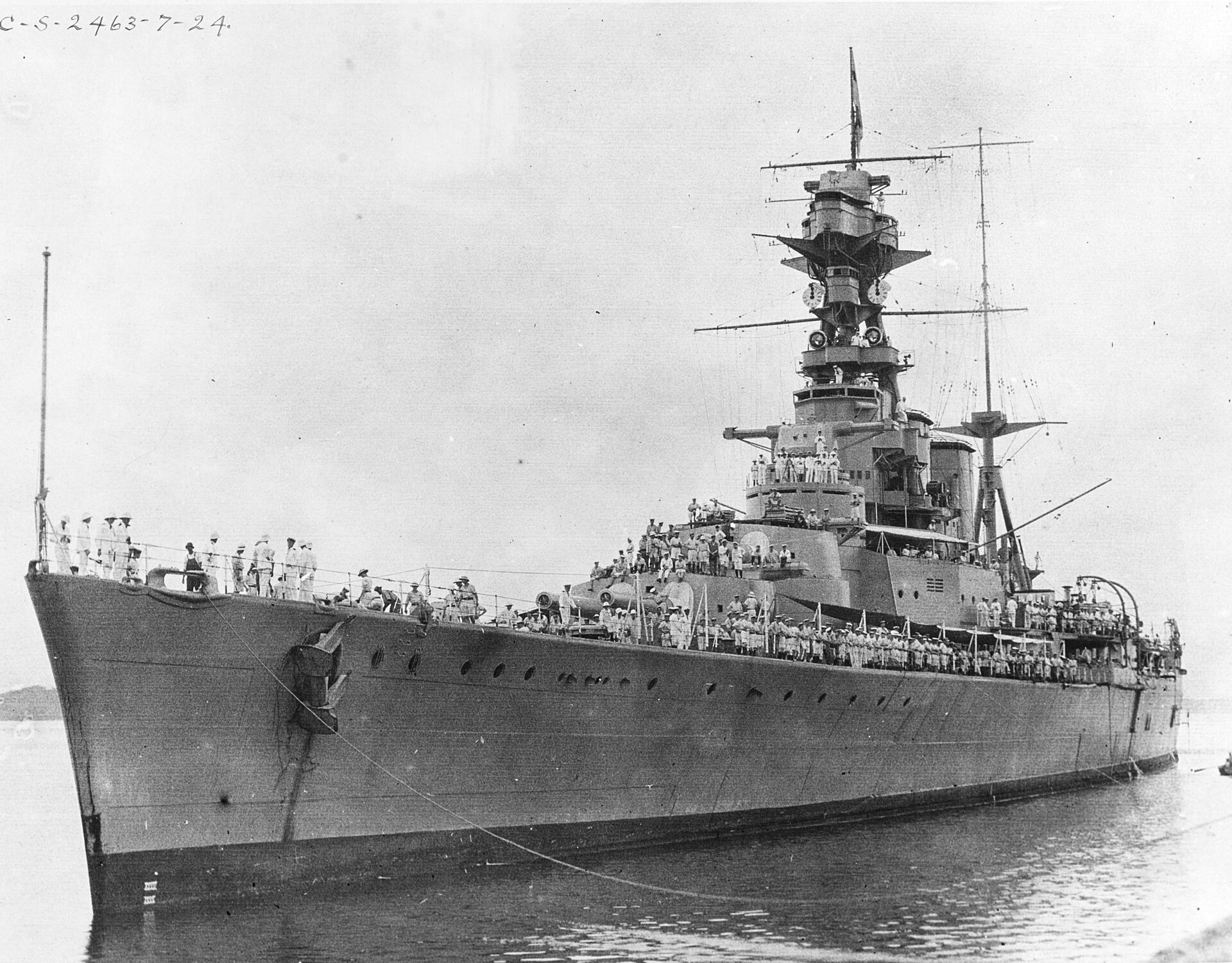
A Ship Built to Impress
Britain started building Hood in 1916, during World War I. She launched in 1918 and joined the navy in 1920. She was called a “battlecruiser” — a ship built to be as fast as a cruiser but hit as hard as a battleship. When she joined the fleet, nothing else in the world was close to her size or power.
Here’s what made her so impressive:
- Length: 860 feet — longer than two football pitches put together
- Weight: around 46,000 tons when fully loaded
- Main guns: eight big 15-inch guns
- Speed: built to reach 31 knots, very fast for a ship that size
- Crew: about 1,400 men
For most of her life, Hood wasn’t fighting wars. She was showing off. In the early 1920s, she sailed around the world as part of a squadron meant to remind everyone how strong Britain’s navy was. Huge crowds came out just to see her pull into port. She was basically Britain’s way of flexing.
The Weak Spot Nobody Fixed
Here’s the part that really matters, and it’s not about her guns.
Hood was designed before a huge naval battle in 1916 called Jutland. That battle taught the British navy something scary: their battlecruisers had thin armor on the deck (the top of the ship), and that meant enemy shells could fall from above and blow up the ship’s ammunition storage. Three British battlecruisers were destroyed that way at Jutland.
After that, engineers added more armor to Hood before she was finished. But making her fully safe would have taken years, and Britain wanted its big new ship ready. So she went out to sea as a kind of compromise. Better protected than the ships lost at Jutland, but still with a weak spot that people in the navy quietly knew about.
For twenty years, nobody tested that weak spot in real combat. Hood just kept sailing around looking powerful. By the time World War II started, she really needed a full rebuild to fix the problem — but that never happened either.
The Morning It All Went Wrong
On May 24, 1941, Hood and a newer ship called HMS Prince of Wales went to stop the German battleship Bismarck. Bismarck had snuck out of Norway and was heading into the Atlantic Ocean to attack British supply ships. The Royal Navy needed to stop her fast, and Hood was sent to do it.
The two sides started firing at each other just before 6:00 AM, in a stretch of water called the Denmark Strait, between Greenland and Iceland.
Right around 6:00 AM, a shell from Bismarck came down almost straight from above and hit Hood near the back of the ship, right where her ammunition was stored — exactly the weak spot from Jutland that was never fully fixed. A massive explosion tore the ship in two. People watching from other ships said they saw the front and back of Hood lift out of the water as she broke apart.
She sank in about three minutes. Only three men out of 1,418 made it out alive.
What Happened After
The news hit Britain hard. Hood had been a national symbol for twenty years, and losing her that fast, to a ship on its very first mission, felt unreal. Winston Churchill is said to have given a short, simple order after hearing what happened: “Sink the Bismarck.”
Every ship the navy could spare joined the hunt. Three days later, on May 27, 1941, they found Bismarck and sank her too.
Divers finally found the wreck of HMS Hood in 2001, broken apart on the ocean floor. It’s treated as a war grave, meaning people don’t disturb it out of respect for the crew who died there.
What the Hood Really Proved
Hood never lost a fair fight. She lost because of a flaw built into her twenty years earlier, one that people knew about the whole time and never fully fixed. She spent most of her life just looking powerful, and the one time she actually had to fight for real, that old weak spot finally caught up with her.
That’s the strange part of her story. The ship that stood for British naval power for a whole generation was brought down by a mistake from the war before the one she was actually in.