In the early 20th century, naval power was everything. Great powers like Britain, Japan, and the United States poured their economy into building battleships. They viewed them as symbols of prestige and tools to show global influence and enforce their demand when needed. But World War I changed everything. The huge number of casualties and destruction destroyed the economy on the brink of bankruptcy. As the war ended, the world couldn’t afford another arms race.
This is the context in which the Washington Naval Conference was organized in 1921. Led by the United States, the conference aimed to prevent another costly naval buildup while accomplish their national agenda without spending billions.
Before the Conference: The Battleship Arms Race
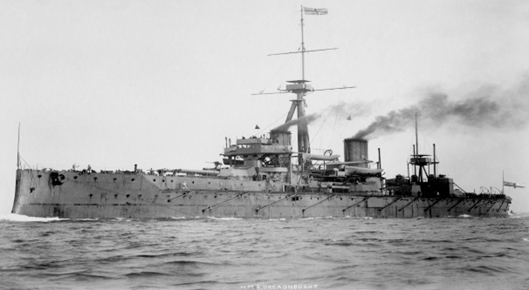
Before World War I, the major powers were locked in a relentless race to build more battleships. Britain, with its mighty Royal Navy, by their law built more capital ships than the number of the 2nd and 3rd number of capital ships combined. Now the United States and Japan quickly followed. These nations believed that naval supremacy was the key to protecting global trade routes and colonial interests.
But World War 1 reshaped military thinking. Despite massive investments, battleships played a surprisingly limited role in the war’s outcome. Instead, trench warfare, submarines, and economic blockades proved more decisive. Worse, the war drained national treasuries and left millions of dead. Most European powers could no longer justify the expense of the navy.
The U.S. Naval Ambitions
The United States continued to expand its navy. The Naval Act of 1916 authorized a massive fleet expansion: 10 new battleships, 6 battlecruisers, and dozens of smaller ships. Even after the war ended, congress allowed to construct 12 more battleships and 16 battlecruisers. The U.S. was on track to build the largest fleet the world had ever seen to protect its interest in Pacific and Atlantic ocean.
Japan’s Eight-Eight Fleet Program
Meanwhile, Japan had their own ambitions. With growing interests in China and dominance over south Asia and the Pacific Ocean, Japan launched the Eight-Eight Fleet program, aiming for 8 modern battleships and 8 battlecruisers by 1927. Japan wanted to become the British Empire of the East and now was the time with help of the British.
Britain Caught in the Middle
Though victorious in World War I, Britain was financially strained and could afford another arms race. Yet with new arms race started by the U.S. and Japan, the Royal Navy had to match those numbers under the law. If Britain lost naval superiority, it risked losing its global empire.
Strategic Concerns and the Push for Diplomacy
Each country had its reasons for building more ships:
- United States: Faced potential threats from both Japan in the Pacific and Britain in the Atlantic. The Anglo-Japanese Alliance remained in effect, and if war broke out, the U.S. feared fighting a two-front war against two of the world’s strongest navies.
- Britain: Feared a U.S.-Japan alliance that threaten its empire on Asia. British diplomats viewed the Anglo-Japanese Treaty were viewed with deep skepticism.
- Japan: Wanted to secure its position in Asia, particularly in China, which was still divided and heavily influenced by Western powers that were weakened by WW1. Japan saw naval strength as essential to regional dominance.
But the economic reality was hard to ignore. A single battleship could cost over 1% of a nation’s GDP. No country could sustain this level of spending for long.
The Washington Naval Conference in 1922
In 1921, U.S. President Warren G. Harding invited major naval powers to Washington, D.C., for a conference focused on naval disarmament and Pacific security. Behind the diplomatic language was a simple truth: no one wanted to keep spending billions on ships that might never be used.
Therefore, the Washington Naval Treaty of 1922, also known as the Five-Power Treaty, came to place. The treaty limited tonnage of capital ship by a ratio of naval power of 5:5:3:1.75:1.75 among the U.S., Britain, Japan, France, and Italy. Freezing construction of new battleships and scrapping capital ships that seem no longer in need.
The Washington Naval Conference seems to slow down the arms race for a while. It was a moment in history when diplomacy won out over interest. While the treaty didn’t prevent future conflict, it stopped the great powers from prestige but rebuilding from being worn down by war and economic strain.