In naval warfare, aircraft carriers carry powerful aircraft and for their utility. But one small British carrier, HMS Unicorn, earned its place in with a gun barrage as if the boat was a battleship.
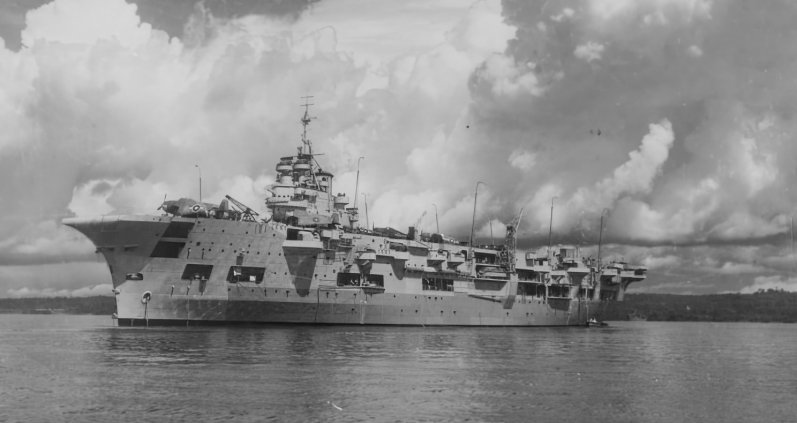
HMS Unicorn was designed by the Royal Navy as a light aircraft carrier and with the ability to repair and support other naval vessels. The Royal Navy needed a vessel that could follow carrier groups to provide support and repairs while also capable of performing carrier operations independently. However, HMS Unicorn’s role remained mostly logistical and support oriented. She transported aircraft, carried them out for maintenance missions, and ensured the fleet carriers could stay operational. After the war, she retired in 1946 yet returned to duty in 1949 to assist HMS Triumph in Asia. No one knew what will happen.
HMS Unicorn in Asia
When the Korean War broke out in 1950, HMS Unicorn was sent into action once again. She became a vital asset to United Nations forces as she delivered troops, equipment, and aircraft across the Asia-Pacific theater. Operating between Singapore through Japan, she served as a logistical lifeline and mobile air base for British operations on the Korea.
The first British troops to set foot in Korea during the war arrived aboard HMS Unicorn. Her presence helped establish the UK’s early contribution to the conflict, underlining the ship’s versatile and often understated role. On September 24, 1951, Unicorn was in route to deliver aircraft to HMS Glory, accompanied by HMS Cossack and HMS Comus. During the mission, her crew spotted a North Korean coastal observation post. HMS Unicorn, usually a support vessel, did something unheard of in naval warfare. She turned her 4-inch dual-purpose guns toward the shoreline and opened fire. According to official Royal Navy records, she fired 16 rounds. This action made HMS Unicorn the only aircraft carrier in history to successfully bombard enemy ground positions using its own guns.
Why This Record Still Stands
Modern aircraft carriers are bristling with technology and air power, but they are rarely armed for direct surface combat. Most carry only defensive weapons—missile systems or small-caliber guns for close-in threats. For a carrier to approach shore, identify a target, and engage it with naval artillery is almost never going to happen and that is why HMS Unicorn’s record will remain unbroken.