Britain still ruled over a quarter of the globe, its industrial and military supremacy was being challenged left and right. To keep its place in the sun, some policymakers and intellectuals proposed Imperial Federation which would turn the “British” parts of the empire (Canada, Australia, New Zealand, and South Africa) into a single, federal state like the United States. However, this a bold attempt to keep Britain relevant never left the drawing board due to reality.
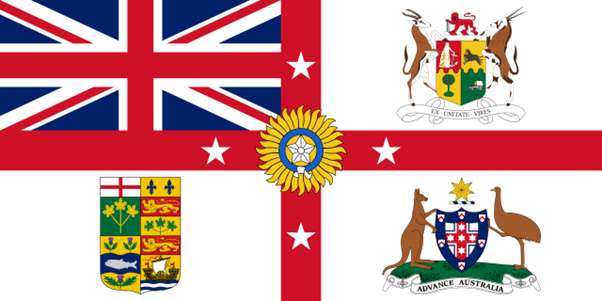
Political Resistance Within Britain
The idea of the Imperial Federation struggled to gain serious support among Britain’s most powerful politicians.
- Joseph Chamberlain, a leading advocate, helped organize Imperial Conferences and hoped to formalize the idea.
- Lord Rosebery endorsed it as the only way to prevent British decline.
But they were countered by prominent opponents:
- William Gladstone saw the empire as a moral mission, not a racial or strategic bloc. He rejected the idea of welding dominions into Britain’s domestic politics.
- Robert Gascoyne-Cecil (Marquess of Salisbury), a hardline imperialist himself, rejected it for different reasons. He thought it logistically impossible.
His concern was blunt and practical: how do you govern territories scattered across the Atlantic, Pacific, and Indian Oceans as a single unit? What happens when their interests diverge — which they inevitably would?
“You can’t make a single nation out of five continents,” he warned.
Conflicting Interests Across the Empire
By the 1880s, Britain’s dominions and colonies had different needs and priorities within their block. During that time, London dictated the policy, and the colonies followed orders. However, if Federation is formed, it would have shared governance. Dominions will send representatives to the imperial parliament with conflicting interests.
This raised thorny questions:
- Would Canada vote to send British troops to fight in Africa?
- Would Australia agree to a naval build-up for the North Atlantic?
- Could New Zealand influence British foreign policy in Europe?
The moment the dominions gained power to dictate the policy, their local interests would clash with imperial strategy and Britain would lose control over its own foreign policy.
Even worse, this new system could make defense budget spending unpredictable. Britain had long shouldered the burden of the military spending; at one point, 88% of military budget came from the British taxpayer. However, if the Imperial Federation came in place, the cost of defense will go up as they would have to treat their domains as mainland also. And the taxpayers will not want to pay the extra taxes for military spending.
The Economics burdens
At the heart of the empire was commerce, not conquest for conquest’s sake. For centuries, Britain expanded overseas to protect precious trade routes to India. Even the late Scramble for Africa was a defensive move to stop rival powers like France and Germany from threatening British control of the Suez Canal and Indian Ocean.
But with the Federation came new economic problems:
- Britain would need to grant trade privileges (Imperial Preference) to its dominions putting of tariff for external goods.
- That meant British consumers would pay more for basic goods, all to support colonies thousands of miles away.
This raised concern to British taxpayers. British workers and merchants was avid supporter of free trade— cheaper American wheat, Argentine beef, and European goods. To them, Free trade was the reason why British came to its economic power in the first place. They weren’t interested in paying a “loyalty premium” for empire-grown products. Also, taxpayers did not want to pay premium that would mostly benefit the dominions not the taxpayers.
The Dominions Were Changing, Too
Even if Britain had pushed the Federation harder, the dominions were becoming their own nations.
- Canada had growing economic ties with the United States.
- Australia and New Zealand began cultivating a Pacific identity.
- South Africa had a tenuous relationship with Britain at best.
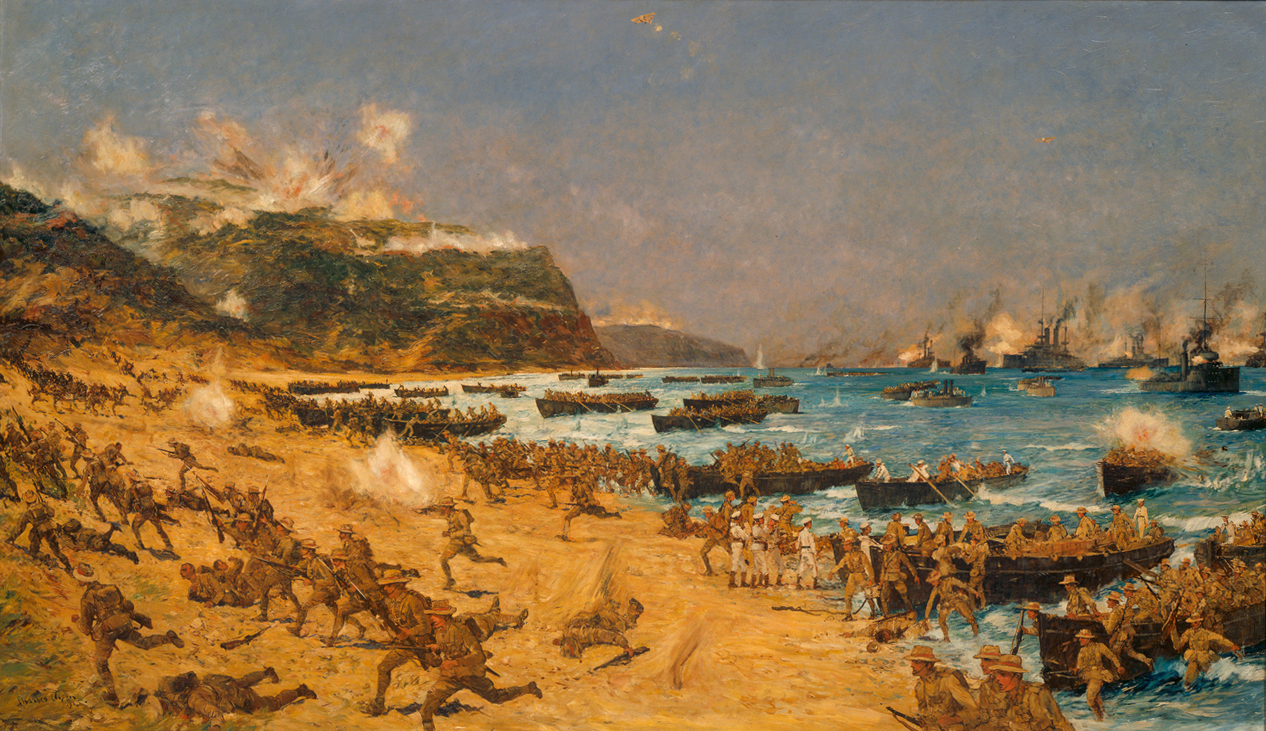
By Archives New Zealand from New Zealand – Landing at Gallipoli, CC BY-SA 2.0, Link
World War I accelerated this trend. Though dominion troops fought bravely under the British command, the war also fostered national consciousness. This especially increased in failure of Gallipoli in 1915 that showed imperial mismanagement and the expendability of colonial troops. By World War II, it was clear these were not independent actors out of British dominion.
Another case was when Britain’s Eastern Fleet was defeated by Japan, Australia and New Zealand turned to the United States for protection instead of British homeland. This led to the foundation for the modern ANZUS alliance.
After the Failure of Imperial Federation
Within the mid-20th century:
- The United States had overtaken Britain as the dominant economic power.
- The Soviet Union had emerged as its ideological rival.
- Britain’s global empire was breaking down into pieces.
In the end, Britain returned to being an island nation, just as Seeley had feared. The empire that once ruled the waves now no longer had impact as new superpowers shaped the modern world after World War 2.